
Oil huh! What is it good for?

Dr James Cooke, CFA
Director of Research
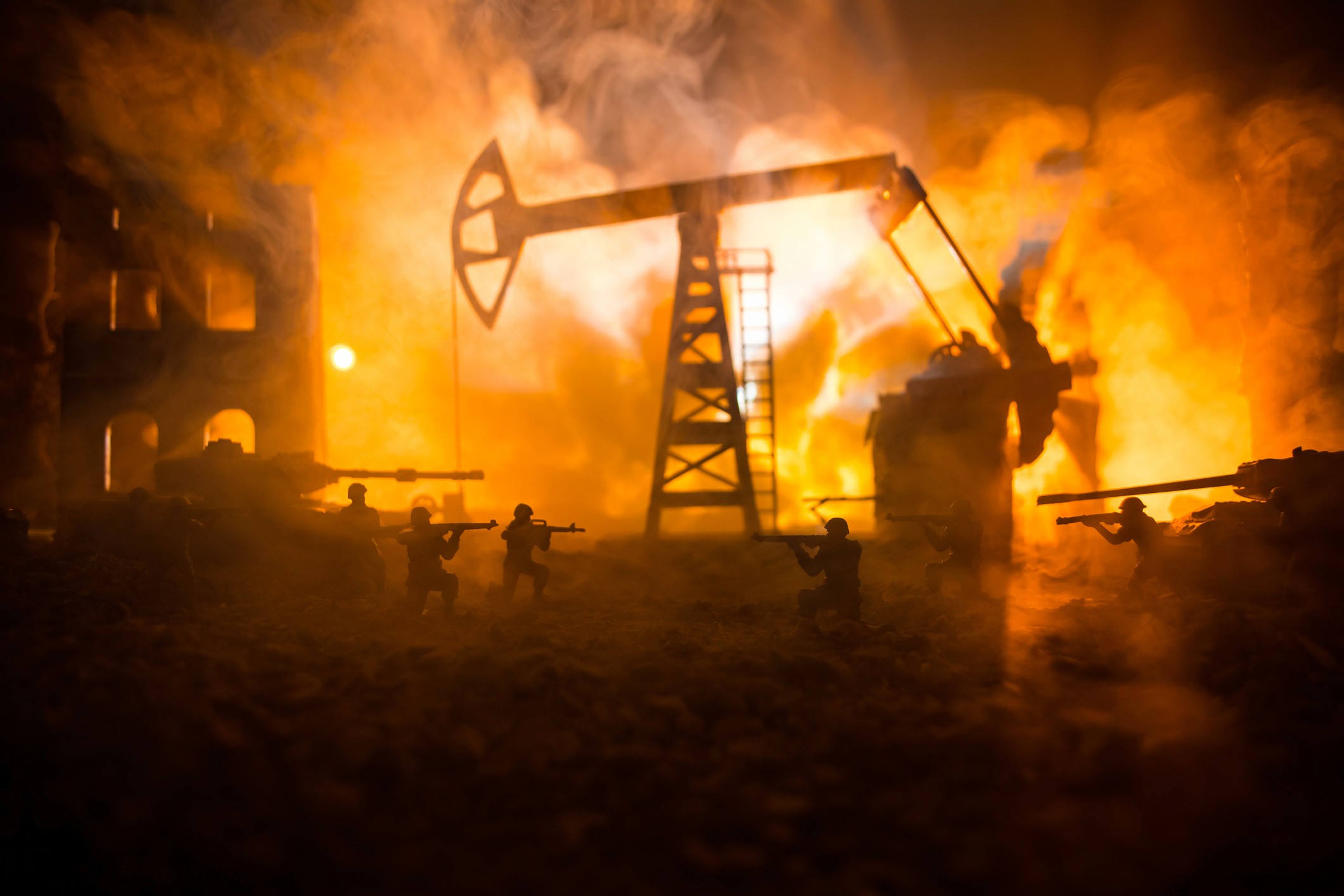
Power and peril
The world once again finds itself at a crossroads where geopolitics, oil and markets collide.
Following the recent US airstrikes on Iranian nuclear facilities, investors are asking: what does this mean for oil, inflation and the global economy?
And who really benefits when the drums of war beat?
Oil remains the lifeblood of the global economy.
Despite the green transition, oil remains the world’s most traded commodity and a pillar of global commerce.
In 2025, global consumption exceeds 103 million barrels per day, fuelling transport, industry and the production of countless goods.
Oil prices serve as both a barometer of economic health and a trigger for inflation.
Iran’s leverage: The Strait of Hormuz
Iran is not just another oil producer. In May 2025, the country produced 3.3 million barrels per day, exporting nearly 1.8 million a day, mostly to China.
But its true leverage lies in geography. The Strait of Hormuz is a 33 kilometre-wide chokepoint at the mouth of the Gulf, with shipping lanes just 3km wide. Around 20% of the world’s oil and gas passes through it.
Any disruption here could trigger the largest oil supply shock in history, which would send prices skyrocketing. Iran’s parliament has approved closure of the Strait, though the final decision lies with the country’s top leadership.
Closure would not just impact the US, but Iran’s own finances as well as China, one of the few countries willing to buy Iranian oil.
History repeats: oil shocks, wars and market turmoil
Past crises show how quickly oil markets can spiral:
1973 Yom Kippur War & embargo: 9% of global supply lost, oil prices quadrupled, global recession followed.
1979 Iranian Revolution: 6% of supply lost, prices nearly tripled.
1990 Gulf War: 7% of supply lost, prices more than doubled.
A closure of the Strait today would dwarf these events. Some economists warn of oil at USD130 per barrel and US inflation nearing 6%, a combination that could derail growth and force central banks to rethink rate cuts.
Iran has the capability to shut the Strait temporarily using mines, submarines and drones.
Doing so would almost certainly provoke a major conflict to reopen it.
Who wins when the world goes to war?
Most would echo Edwin Starr’s sentiment that war is
“good for absolutely nothing”. Destruction of innocent lives, war means tears, to thousands of mother’s eyes”
While nations suffer, a few sectors benefit and asset prices swing:
Defence contractors: Raytheon, Boeing and BAE Systems typically see surging demand. The sector has gained since Russia’s invasion of Ukraine and rising defence budgets.
Oil companies: Price spikes can generate windfall profits even as consumers and importing nations bear the cost. Gains tend to be short lived.
Safe havens: Investors often flock to US Treasuries, gold and the yen. The dollar’s safe haven status, however, is no longer assured. ARC’s recent Market Sentiment Survey showed increased uncertainty.
The rebalancers: Large market moves can provide better entry points. Investors who rebalance with discipline often benefit over time.
America’s role: still the anchor
The US dollar remains the world’s reserve currency, used in over half of global trade transactions. America’s military presence and economic scale give it significant leverage, even as public appetite for foreign interventions fades.
President Trump’s recent actions have exposed rifts within his base, many of whom favour an “America First” approach.
What next?
Potential scenarios:
De-escalation: Iran’s retaliatory missile strikes on US bases may have helped it save face without provoking a larger US response. A negotiated settlement remains the clearest path to stability.
Escalation: A serious move to block the Strait would trigger an oil shock, market panic and likely military action.
Protracted uncertainty: Ongoing skirmishes and political drift could keep oil prices and inflation elevated, with markets oscillating between fear and hope.
Key takeaways for investors
Expect volatility: Oil, equities, and currencies will react to headlines from the Gulf.
Safe havens shine short term: Identifying the safe havens is always easy in hindsight. Historically the US dollar and gold have fared well, though at present there is some uncertainty as to the US dollar’s status.
Defence and energy stocks: These sectors tend to outperform during geopolitical shocks.
Long-term resilience matters: Past crises show markets often rebound after the initial shock, but the timing and magnitude are uncertain.
Stay alert, stay diversified and remember: in every crisis lies both risk and opportunity.
This article is provided for information purposes only and does not constitute investment advice or a personal recommendation. ARC accepts no liability for any action taken or not taken in reliance on this content. Click here for regulatory information, third-party data terms and full disclosures.
Asset Risk Consultants (Jersey) Limited is registered by the Jersey Financial Services Commission to conduct investment business under the Financial Services (Jersey) Law 1998 (ref IB0257).