
The return of hedge funds

Dr James Cooke, CFA
Director of Research

Back once again. The renegade master of ill-behaved returns
Hedge funds have spent much of the past decade out of favour. That made sense in a world of zero rates and rising equity markets.
That world has changed. With equity valuations stretched and macro conditions less forgiving, the case for genuinely diversified and, at times, ill-behaved returns looks stronger than it has for years.
A cycle turns
The hindsight fund is always in the top quartile.
The advent of quantitative easing following the financial crisis and its expansion in response to the Covid-19 pandemic meant that from roughly 2009 to the end of 2021, in hindsight, investing was unusually simple. Interest rates sat near zero, inflation was muted and liquidity was abundant. In that environment, a traditional 60/40 portfolio delivered more than 9% per year over this period with equities dominating outcomes.
This backdrop had two consequences:
diversification looked unnecessary
complexity looked expensive
Hedge funds, with higher fees and more nuanced return drivers, lagged headline equity indices and drifted out of favour. That critique was not entirely wrong.
Over recent years, hedge funds have delivered around 10 to 12% annual returns, versus materially higher equity market gains in a strong bull run. However, this analysis is a little too simplistic.
It judged a diversifying asset on how it behaved in a period when diversification was, in hindsight, not needed.
A regime shift
There has been a change. We have moved from a period of cheap capital to one where:
inflation has returned
interest rates are structurally higher
macro volatility has increased
Hedge fund returns tend to be closely linked to the opportunity set created by dispersion, volatility and the cost of capital.
Two broad empirical patterns stand out:
1. Higher rates support hedge fund returns.
Across long data sets, hedge fund excess returns have tended to rise alongside interest rates. This is partly mechanical, through higher cash returns and short rebates, and partly behavioural, through greater opportunity to exploit mispricing.
2. Performance improves in tougher markets.
Since 1990, hedge funds have outperformed equities and traditional portfolios during periods of above average inflation and more normal rate regimes.
A simple way to frame this is that hedge funds do not require markets to rise to generate returns. They require markets to move, disagree or break.
Equity valuations
Another major change has been in equity valuations. The starting multiple for equities now is much more demanding than it has been in the recent past.
Market returns can be decomposed into earnings growth and multiple expansion. There are question marks about the sustainability of both.
This chart decomposes S&P 500 returns into earnings growth (blue bars) and changes in valuation multiples (orange bars), showing how much each has contributed to overall market performance (white line).
Strong earnings have driven most market gains, with valuation expansion providing an additional tailwind.
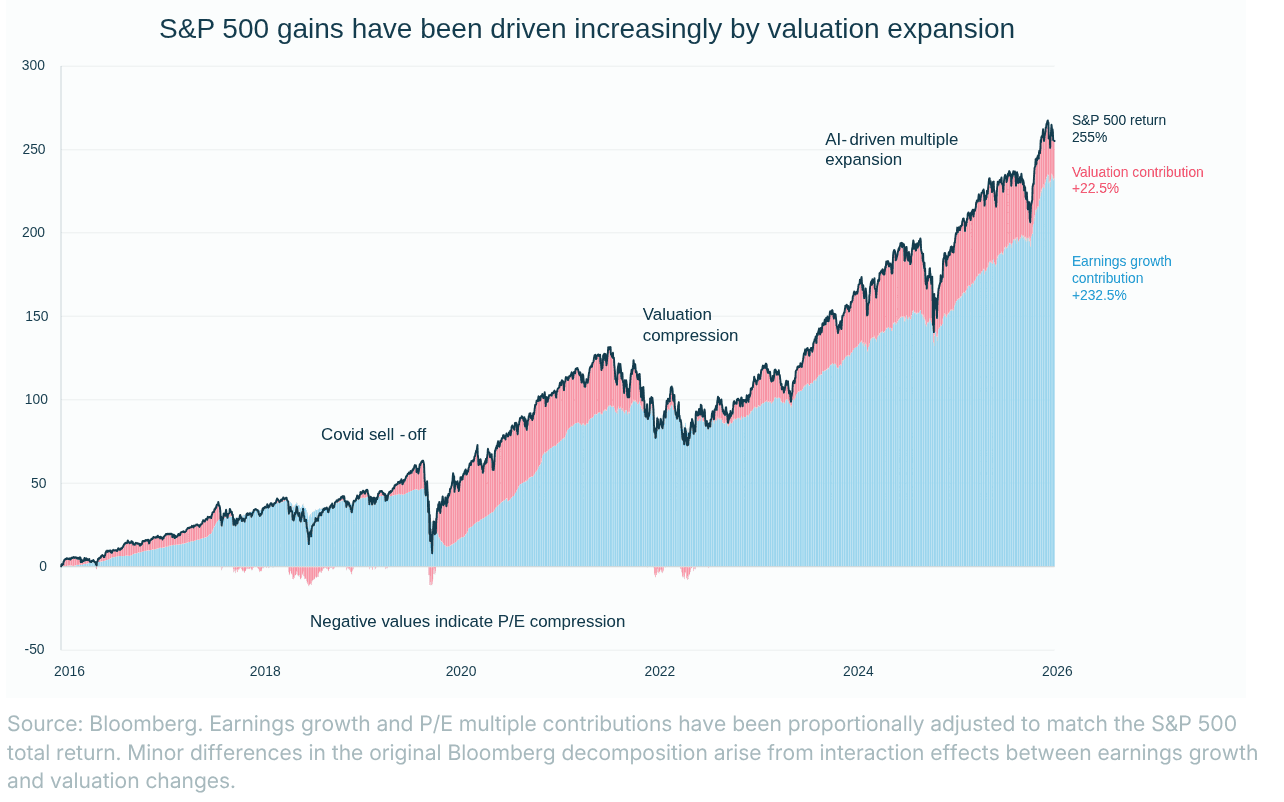
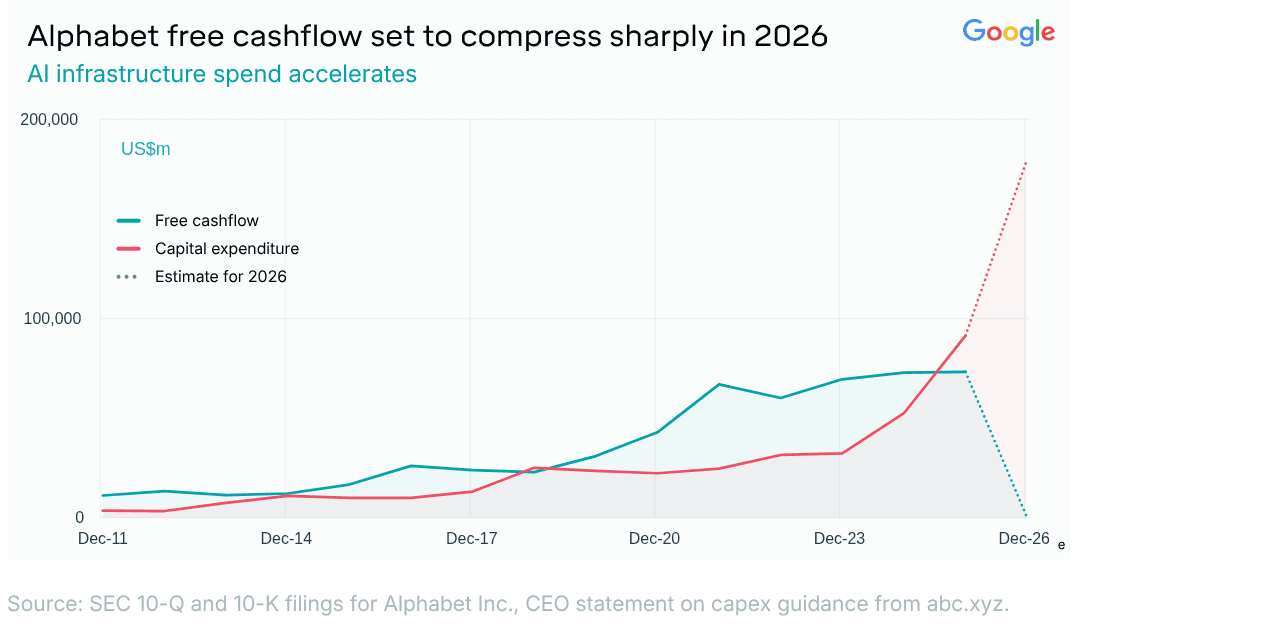
Considerable earnings growth has come from the build-out of AI technology, including required manufacturing capabilities and infrastructure. Many of the advantages that AI brings to businesses are obvious and companies have been willing to invest heavily, often sacrificing all free cash flow in order to maintain competitive positions.
Over time, incremental improvements are likely to fade, pricing pressures may emerge and company management teams may shift back towards cash generation. At that point, earnings expectations may prove too optimistic.
Global equity markets now trade on a trailing P/E of around 23, above long-term averages. Many major markets sit at elevated CAPE percentiles relative to history.
The US market in particular has traded at valuation levels well above its long run mean. High valuation multiples do not cause drawdowns. They do, however, reduce the margin for error and compress forward return expectations.
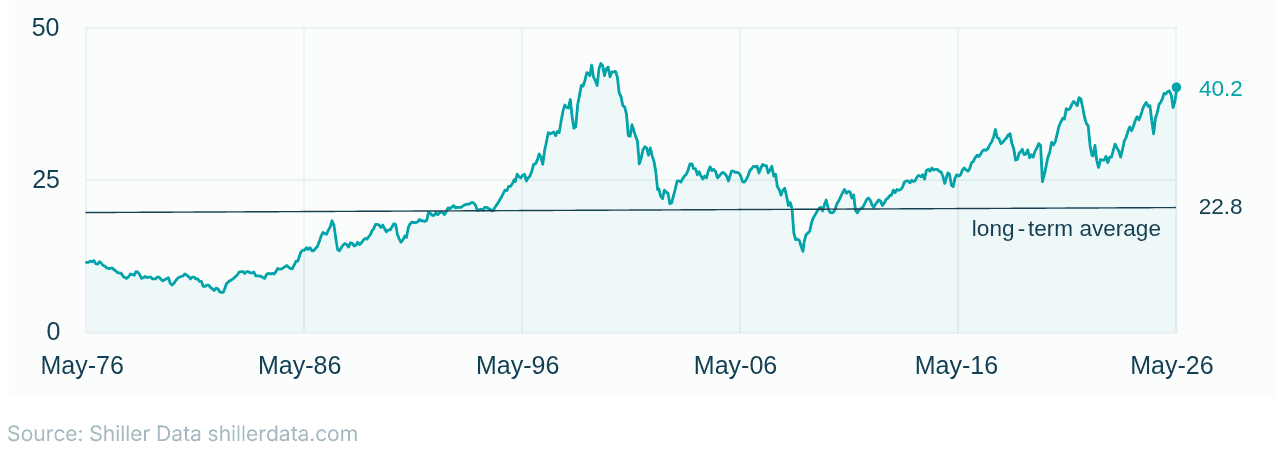
Shiller CAPE measures equity valuation by comparing prices to average, inflation‑adjusted earnings over the past 10 years.
Investors face an uncomfortable asymmetry:
strong recent returns
more modest prospective returns
a wider range of possible outcomes
This combination is precisely where diversification earns its keep.
What do hedge funds actually offer?
The term hedge fund is used loosely. It can refer to highly leveraged equity strategies or market neutral approaches with varied sources of return.
In practice, it is a Wildchild of an asset class, diverse, unconstrained and at times deliberately different. In an environment where there is uncertainty around valuations and earnings, strategies with low market beta and less dependence on broad market direction should attract attention.
On the plus side, hedge funds can offer:
Access to a wide range of flexible opportunities, including long and short positioning and dynamic exposure management
Access to inefficiencies. Strategies such as event driven, relative value or macro target opportunities that long only portfolios cannot capture.
Improved risk adjusted returns. Historically, hedge funds have delivered competitive returns with lower volatility and better downside protection than equities.
The trade offs
Fees matter. Management and performance fees can materially reduce net returns and require careful negotiation.
Complexity and dispersion. Strategies are heterogeneous and outcomes vary widely between managers. The gap between top and bottom quartile managers is significant.
Liquidity constraints. Lock ups and gating can limit flexibility.
If you know how to look and analyse them, identifying some of the best hedge funds can be straightforward. Accessing those managers can be more difficult, given capacity constraints imposed by many of the most successful firms.
Taken together, this is not an asset class you buy passively. Outcomes depend heavily on selection and portfolio construction.
Why the opportunity is back
Put the pieces together and the argument becomes clearer.
First, the macro tailwinds have shifted. Higher rates and inflation increase the opportunity set for active, unconstrained strategies.
Second, traditional diversification is less reliable. The correlation between equities and bonds has been less stable, weakening the classic 60/40 framework.
Third, starting valuations matter more. When equities are expensive, the cost of relying on them exclusively rises.
Finally, the industry has matured. With over $5tn of assets, hedge funds are now a core institutional allocation, with broader strategy sets and better infrastructure than in earlier cycles.
What this means in practice
Over the long term, equities are likely to form a large part of most diversified portfolios. Right now, however, this is a reminder to diversify when it feels least necessary.
A pragmatic approach to including hedge funds typically involves:
combining complementary strategies such as macro, relative value and equity long-short
focusing on managers with clear, repeatable sources of return
paying close attention to fees and alignment
constructing portfolios deliberately, not accumulating funds opportunistically
In conclusion
Hedge funds did not disappear. They were crowded out by an unusually benign environment for traditional assets. That environment has changed. With equity valuations elevated and macro conditions more volatile, the case for non-market driven returns is stronger.
Hedge funds offer one route to achieve this, but only when used well. Access, selection and pricing are the difference between average outcomes and good ones.
It is a good time to be diversifying. Done properly, hedge funds can help. Done with care, they can help more. So yes, where appropriate, we would advocate adding some ‘ill behaviour’.
In 2008, Warren Buffett bet $1m that a low cost S&P 500 index fund would beat a diversified portfolio of hedge funds over 10 years. Ted Seides took the other side. By 2017 the index fund had returned about 7% a year, versus roughly 2% to 3% for the hedge funds (after fees). The bet became a shorthand for hedge fund underperformance in a post‑crisis bull market.
This article is provided for information purposes only and does not constitute investment advice or a personal recommendation. ARC accepts no liability for any action taken or not taken in reliance on this content. Click here for regulatory information, third-party data terms and full disclosures.
Asset Risk Consultants (Jersey) Limited is registered by the Jersey Financial Services Commission to conduct investment business under the Financial Services (Jersey) Law 1998 (ref IB0257).